
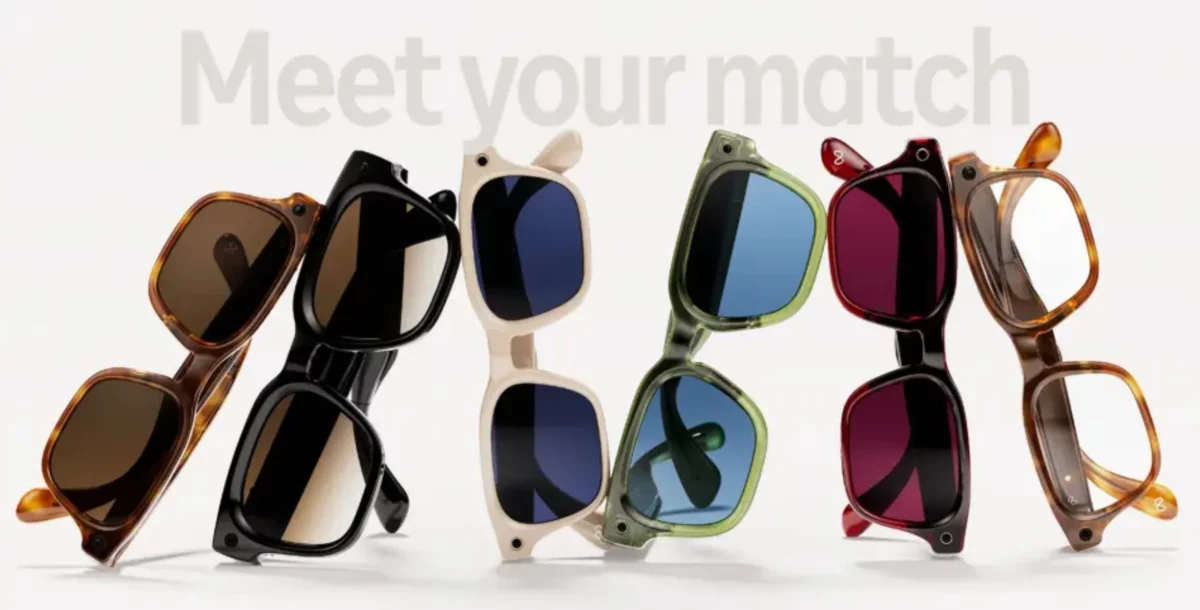
Five years of Ray-Ban co-branding, and Meta just walked away from it. The company has unveiled its first self-branded smart glasses line, and the Meta Glasses starting at $299 are the clearest sign yet that Meta wants to own this category outright, not just rent someone else’s fashion credibility. The new models match the hardware specs of the Ray-Ban Meta Gen 2, which starts at $359, but ship without the Ray-Ban branding and licensing premium.
Three frames, one clear goal
Meta has launched smart glasses under its own brand for the first time, pricing the Adventurer and Fury models at $299 each. The Adventurer has a rectangular Wayfarer-like shape available in standard and large sizes, while the Fury shares that silhouette but is thicker. Then there is the third option, the one that has grabbed most of the attention. A model called Starfire, designed in collaboration with Kylie Jenner, costs $399 and adds a distinctive angular frame.
EssilorLuxottica, the parent company of Ray-Ban and Oakley, is manufacturing the glasses despite Meta designing them in-house and putting its own name on them, with EssilorLuxottica’s logo appearing on the temple arms and packaging alongside Meta’s. So the factory is the same. The box just looks different now.
The new glasses carry over the same 12-megapixel camera, 3K video capture, five-microphone array, and eight-hour battery life as the existing Ray-Ban Meta Gen 2 glasses, with the included case adding about 40 hours of additional charge. The glasses are water-resistant with an IPX4 rating, meaning they can handle splashes and light rain. The companies are offering 26 color and lens combinations between the Adventurer and Fury alone, including tortoise, black, and green finishes, plus transition, polarized, and clear lens options, and the glasses support prescription lenses with a power range of -12 to +2.25.
Muse Spark, the AI that runs the show
Meta Glasses are the first device to ship with Meta AI powered by Muse Spark from day one. Muse Spark is the first model out of Meta Superintelligence Labs, and it’s built specifically for Meta’s own products rather than as a general-purpose chatbot. The glasses ship with Muse Spark, which the company says improves response quality and adds 14 new languages to live translation support, including Mandarin, Korean, Japanese, Arabic, and Hindi, bringing the total to 20. A new “Dynamic Photo” feature captures a burst of images and selects the best shot, and pedestrian turn-by-turn navigation is coming to the camera-equipped lineup after debuting on Meta’s display glasses.
Personally, the Muse Spark angle is the most interesting part of this launch. Meta is quietly moving away from its open-source Llama approach for its own hardware, and that shift says a lot about where the company thinks the real value lies.
Kylie Jenner’s Starfire is more than a name
The most noticeable exclusive detail on the Starfire is a small gem affixed to the top right corner of the right lens, close to where the camera is. It’s a nod to how Jenner gets hounded by paparazzi, with the way it catches light seeming like flashes of cameras. Buyers can also select Jenner as the voice for the AI and all other spoken elements like the onboarding instructions or battery life readout. A physical difference is that the adjustable nose bridge is made of metal, which makes it easier to wipe makeup off of.
The Kylie Jenner collaboration on the Starfire reflects Meta’s effort to position smart glasses as a fashion accessory rather than a tech gadget. Jenner’s involvement mirrors the influencer-driven marketing strategy that helped Ray-Ban Meta reach mainstream buyers who might not have considered a Facebook-branded wearable. You can read more about why those Ray-Ban Meta lenses became so popular in the first place.
A market Meta already dominates, for now
Smart glasses shipments surged by 167% in the first quarter of 2026 compared to the same period in 2025, according to IDC. Meta dominates the space with 69.2% of the market. Meta CEO Mark Zuckerberg said in an April earnings call that the number of people using its glasses daily has tripled year-over-year.
That lead will not last unchallenged. Google and Samsung are collaborating on a new pair of AI glasses launching later this year with similar functionality. Apple is widely expected to release its first smart glasses in 2027, designed in-house rather than through a partner brand. Snap introduced its Specs last week, carrying a $2,195 price tag and described by CEO Evan Spiegel as a smartphone alternative. That last one is a very different product at a very different price, but it shows how crowded this space is getting.
The Meta Adventurer, Meta Fury, and the $399 Meta Glasses by Kylie are available now at Meta.com, LensCrafters, Sunglass Hut, Best Buy, and Amazon. The official Meta and EssilorLuxottica announcement has the full details on availability and configurations. According to Bloomberg, Meta also hinted that it’s considering a version of its glasses without a camera, focusing on an audio-only experience for phone calls, media playback and interacting with its AI tools. A camera-free model could push the price even lower, which would make the $299 entry point look expensive in hindsight.