
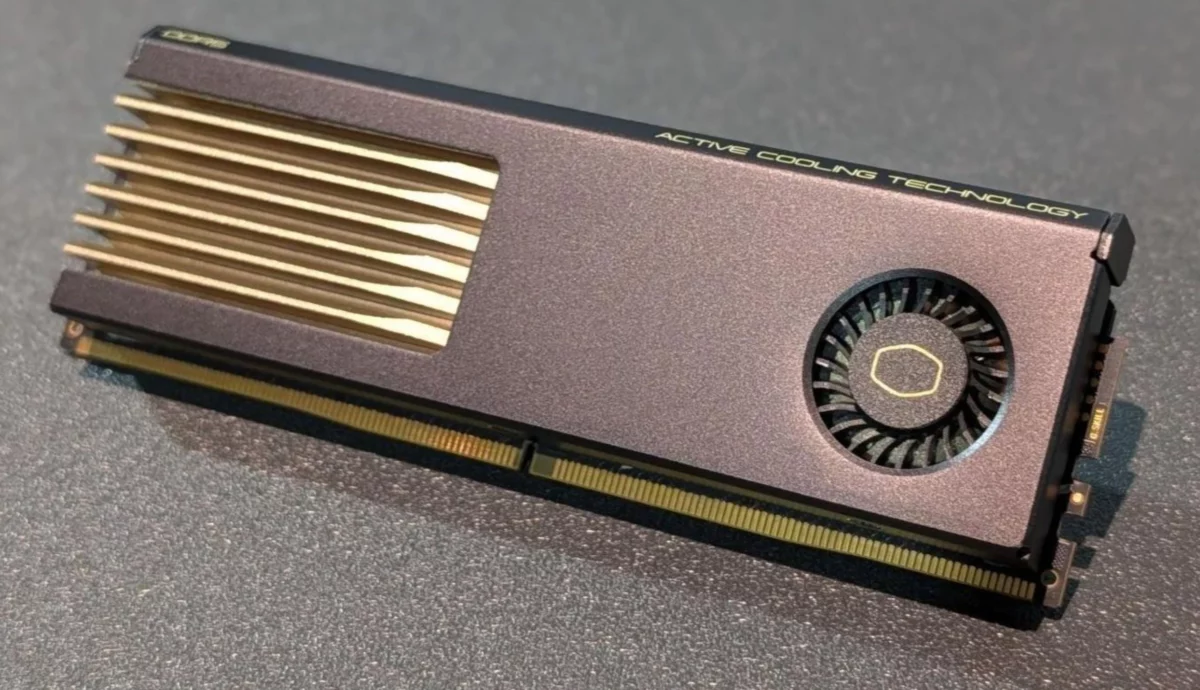
High-frequency DDR5 memory runs hot, and that heat is increasingly the thing standing between a stable system and a crashing one. That is exactly the problem that Cooler Master and G.SKILL are tackling together with the MasterDimm AC, a co-engineered DDR5 kit that puts Cooler Master thermal memory technology directly on the module itself. The partnership was announced ahead of Computex 2026, where the product will be shown at Cooler Master’s Taipei headquarters.
What the MasterDimm AC actually does
The idea is straightforward. Instead of relying on whatever airflow happens to drift past the memory slots, the MasterDimm AC ships with a dedicated active cooling architecture built into the module. Cooler Master says the design delivers up to a 15°C thermal improvement over conventional passive setups. That figure matters more than it might seem. Community testing has long shown that DDR5 stability starts to degrade above 50°C, with crashes becoming likely above 55°C, because the standard carries its own on-module power management circuitry that generates extra heat compared to DDR4. A 15-degree buffer is a real margin, not a marketing rounding error.
The acoustic side of the design is also worth noting. The integrated blower fan and specially shaped heatsink are rated to keep noise below 35 dB, which puts it in the range of a quiet desktop fan rather than a jet engine. For a workstation or content creation rig that runs under sustained load for hours, that balance between cooling and noise is genuinely useful.
Speeds, capacities and platform support
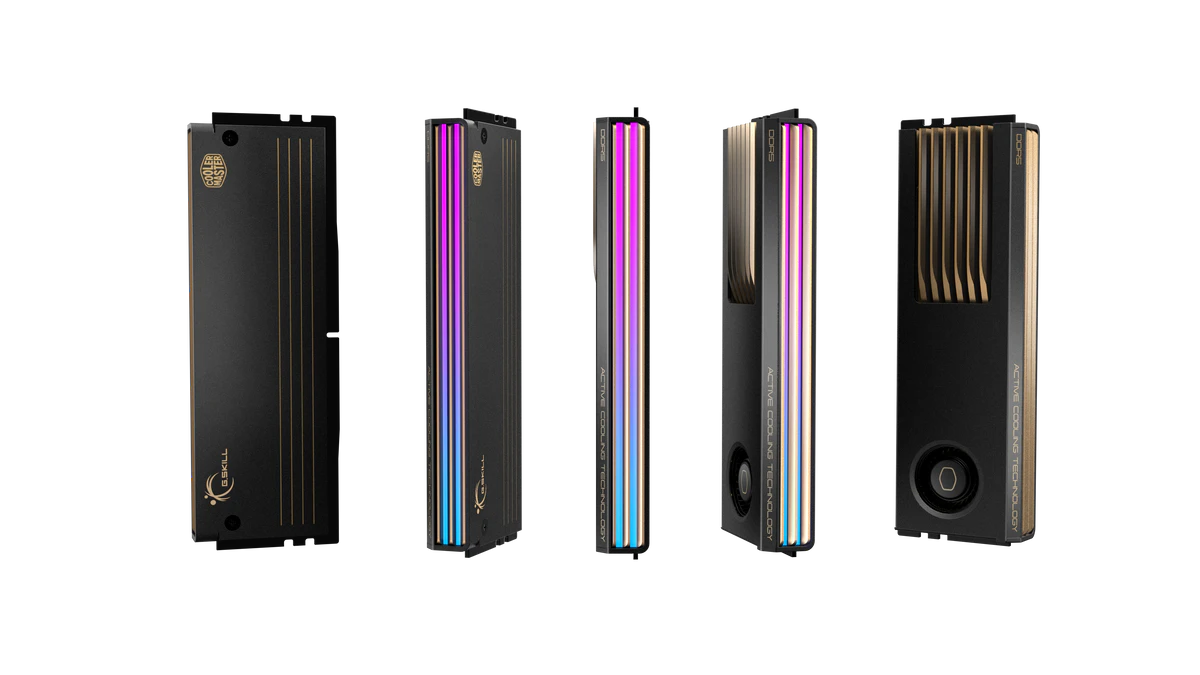
On the spec sheet, the MasterDimm AC covers two distinct use cases. For AMD platforms, it supports EXPO profiles up to DDR5-6000 CL26, a low-latency sweet spot that G.SKILL has refined across several product lines. For Intel systems, the kit goes further, reaching DDR5-8400 via XMP 3.0 in CU-DIMM format, the clocked unbuffered variant that allows higher frequencies on compatible Z890 motherboards. Capacity tops out at 64 GB per module, meaning a two-stick kit can reach 128 GB, which is the kind of headroom that AI inference workloads and large creative projects actually consume. If you want a deeper look at how DDR5 compares to its low-power sibling, our piece on LPDDR5 vs. DDR5 differences and features covers the fundamentals well.
The bigger picture at Computex 2026
Cooler Master is framing the MasterDimm AC under its Computex 2026 theme, “Thermal Authority, Every AI Reality,” and the framing makes sense. As AI workloads move from data centers into workstations and high-end desktops, the thermal demands on every component in the chain go up, memory included. G.SKILL, for its part, is arriving at Computex with a broad DDR5 lineup covering gaming, server, and AI applications, plus its annual OC World Cup 2026 competition running from June 2 to June 5 at Nangang Exhibition Center. The MasterDimm AC sits at the intersection of both companies’ strengths. G.SKILL’s overclocking pedigree and Cooler Master’s thermal engineering depth.
There is no retail pricing or availability date confirmed yet. What is clear is that the MasterDimm AC represents a considered answer to a real problem, one that enthusiasts and professionals building high-density DDR5 systems have been working around with improvised fan brackets and aftermarket coolers for a while now. Having it solved at the module level, quietly and within spec, is the kind of thing that tends to age well.